

August in Western North Carolina is a time when all of nature is at its peak. The intense and vibrant green shades of the mountains, meadows and forests create a backdrop from which bright reds, oranges, yellows and purples distract and delight. Whether you are walking along a mountain stream or along a high ridgetop overlooking breathtaking views, you will discover flowers, fungi, birds, insects and reptiles of every shape and color imaginable.
Three of my favorites are the Yellow Fringed Orchid (Platanthera ciliaris), the White Baneberry or Doll’s Eyes (Actaea pachypoda) and the stunning, iridescent Pipevine Swallowtail (Battus philenor).
Yellow Fringed Orchid
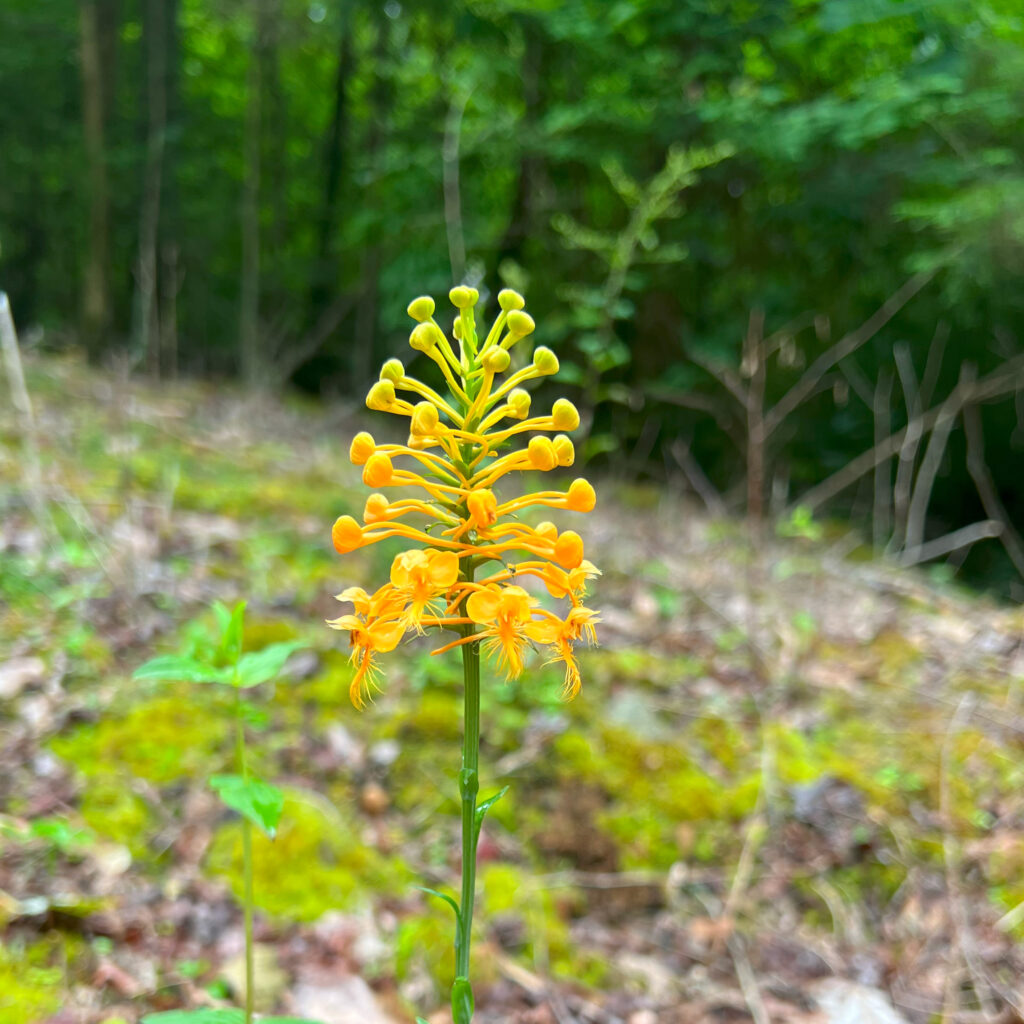
You will find the yellow fringed orchid in areas that you might not expect. They love full sun and dry rocky hillsides. They can be commonly found beneath powerlines where the area has been cleared of plants that, if allowed to grow, would shade this wonderful orchid so much that it would wither and die. It is a mystery as to why this bright orange orchid was called “Yellow”. The orange flowers bloom along a raceme sticking straight up into the air. The flowers are pollinated by butterflies so you can be assured that you will see some of our beautiful butterfly species circling and tasting their nectar. Folklore stories claim that the Cherokee would use a single fringed flower as bait to catch trout. The fringed petals resemble a fly. Keep an eye open as you drive along the roads for splashes of fluorescent orange. These orchids prefer the sunlight of the open road and fields.
Doll’s Eyes
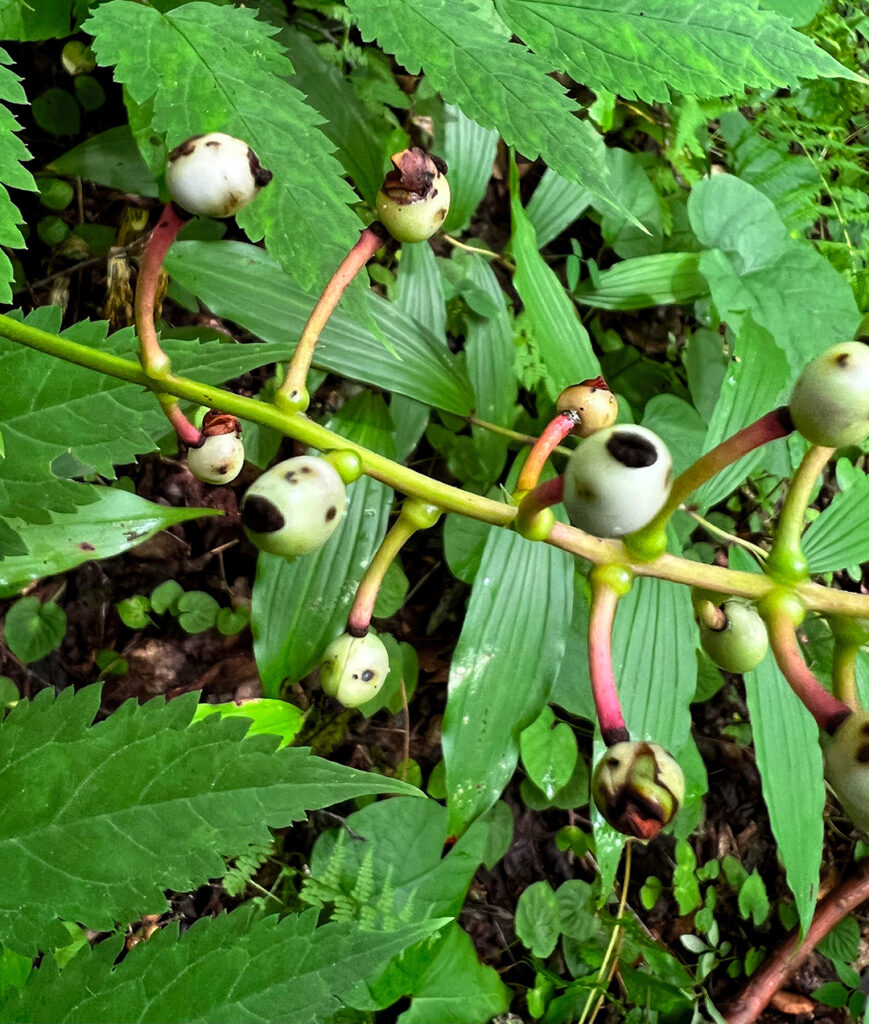
White Baneberry is often called “Doll’s Eyes” because their fruits look just like the eyes of the dolls made in the late 1800’s, early 1900’s. Each pure white fruit is produced at the end of a short red stalk or pedicel. In the center tip of the white fruit, it appears as if someone has painted a dot of black paint thus, its – name. The fruit is toxic. All parts if this plant contain a cardiac glycoside, a powerful heart stimulant. You can easily find this plant growing, usually in patches of several, in moist, rich shade. I walk along the Joyce Kilmer Memorial Forest Double Loop Trail and look for them along the upper loop, alongside the massive Tulip Poplars and the delicate Black Cohosh.
Pipevine Swallowtail Butterflies
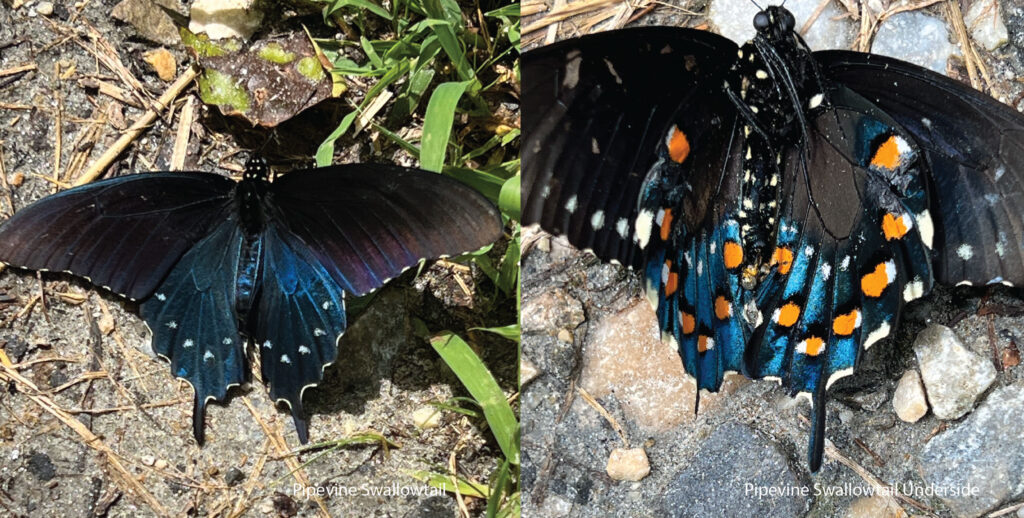
August is the month that I observe the most Pipevine Swallowtail butterflies. They are busily laying eggs and you will see them hovering over the heart-shaped leaves of the Pipevine. They never stay still long. They lay an egg or two and move on to the next leaf or plant. The butterfly appears all black at first, but when the light hits their upper wings, the scales reflect an iridescent blue-green. The undersides of the hind wings are spectacular! Large red spots bordered with black and white against a background of shiny blue. They are unmistakable. You may also notice these swallowtails clustered together around damp ground or mud puddles eagerly sucking up salt and minerals from the ground. They will flutter up in a cloud for a few seconds and then settle back down, allowing for exquisite photographs.
Tips for Enjoying Graham County Trails in August
It is important to remember that August is the last month of our glorious summer. When you visit the area, make sure to wear closed toed shoes with good tread – not flip flops. Stinging insects are numerous, as are snakes We often have popup showers that make the ground slippery. Make sure to bring a sturdy walking stick and plenty of extra water. As you hike along the streams and trails, be extra aware of all the teeming life that surrounds you. And don’t forget your camera!!
Author: Kim Hainge