Cheoah River Releases
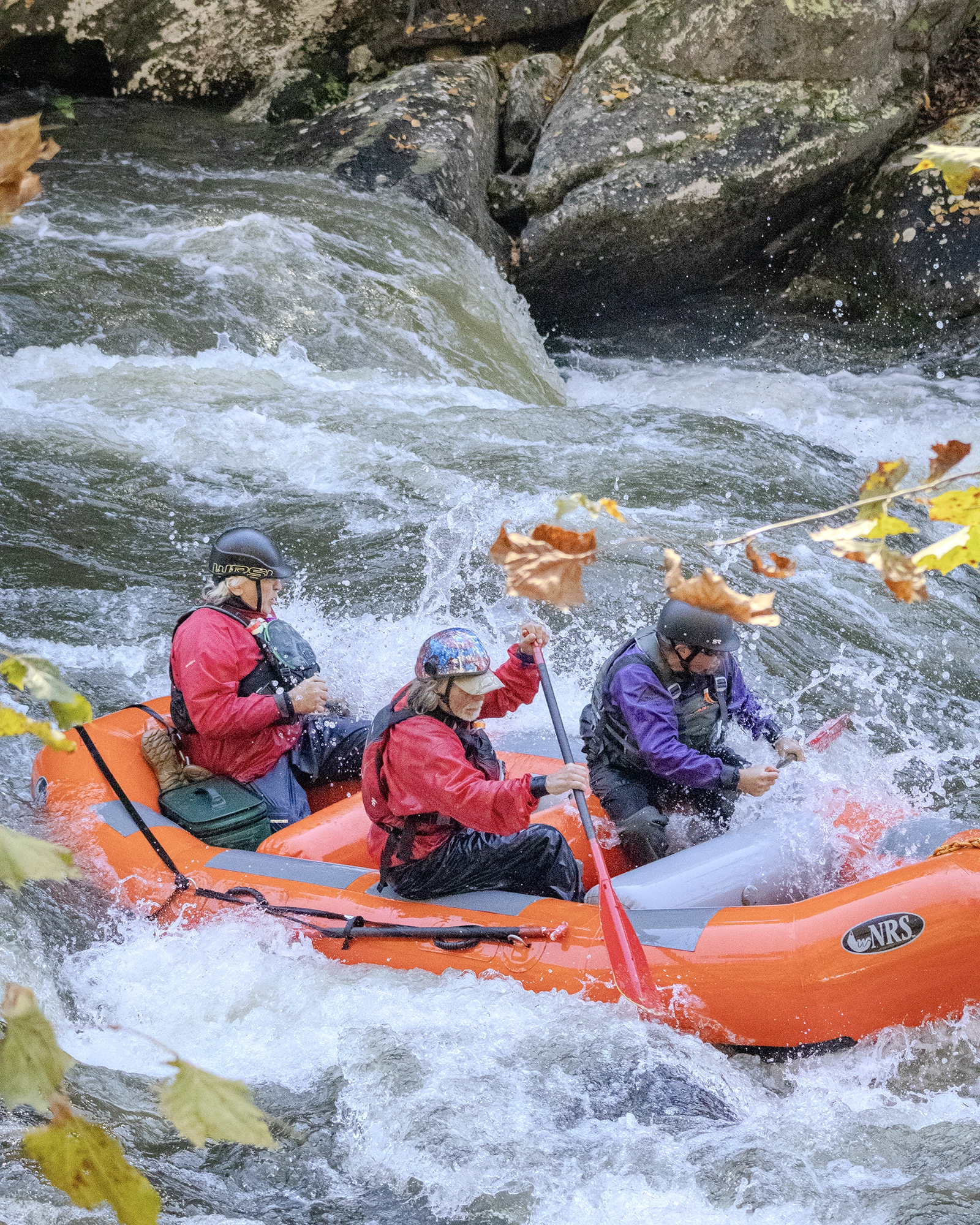
World Class Whitewater
Below Santeetlah Dam, The Cheoah River drops nearly 800 feet in nine miles, tumbling through a narrow boulder lined valley to Calderwood Lake. For most of the year it is used only by fishermen but on scheduled weekends called “releases,” the dam sends 1,000 cubic feet per second (cfs) downstream, and the Cheoah becomes one of the most challenging Class IV-V whitewater runs in the Southeast.
Paddlers travel from all over the country for release weekends. You don’t have to get wet to enjoy the day: US 129 follows the Cheoah nearly the whole way and some of the largest rapids are in plain view from the bank.
Whitewater runs on the Cheoah should only be attempted by advanced & expert paddlers
Coming to watch? See Where to Watch and Spectator Safety information below.
Event Details
WHERE: Cheoah River along US 129, between Santeetlah Dam and Calderwood Lake
WHEN: Selected Weekends, February to November. Releases typically run 8 am to 4 pm. See the current release schedule below.
COST: Free to watch. Paddlers need a daily Forest Service high flow bracelet, $5, available at O’Henry’s Getaway.
SPECTATORS: Welcome. Best viewing is at Tapoco Lodge, Bear Creek Falls, and the swinging bridge.
Spectator Information

Make a Weekend of It
Release weekends are an exciting time to stay at Tapoco Lodge which sits on the riverbank. Booking a room there puts you steps from the action; book early. Not staying? Come for breakfast and watch the water rise.
Spectator Safety
- STAY OUT OF THE WATER. Release flows are fast, cold and powerful.
- Keep back from wet rocks and the bank’s edge, and keep children and pets close.
- Park completely off US 129 and only in established pull-offs. Never stop in the travel lane.
- Leave room for shuttle vehicles and emergency crews.
- Watch for traffic when walking along or crossing the highway.
Where to Watch
US 129 follows the Cheoah for most of its run, so some of the best whitewater is visible from the bank.
Bear Creek Falls. The biggest drop on the river, a ledge about 12 feet high, and the spot where paddlers pause to pick their line.
The swinging bridge. Between The HQ and Meadow Branch; parking for one vehicle only. Approach traveling north on 129 from Tapoco Lodge; use caution due to uneven shoulder.
Tapoco Lodge. The Cheoah River runs right past the lodge. Water leaves the dam at 8 am and takes time to travel downstream. Paddlers usually reach the lower river around 11 am. On the busiest release days the lodge may limit access to dining guests, so call ahead before you go. Website: Tapoco Lodge Phone: +1 828-498-2800
Cheoah River Release Schedule
Below are the upcoming Cheoah River Release dates through 2027.
Events
List of events in Photo View


Paddler Information

The Cheoah is continuous, technical Class IV-V whitewater with trees and brush growing in the streambed.
A reliable roll and self-rescue experience in Class IV-V water are essential.
Put-in
Forest Service Access just below Santeetlah Dam, access areas along US 129, and O’Henry’s Getaway.
Take-out
Calderwood Lake boat launch.
Bracelet
Bracelets are required for each paddler, each day. Bracelets are $5 and are available at O-Henry’s Getaway.
Flows
Below is a description of each flow schedule by Magnitude. Each calendar event has the magnitude and flow schedule in the event description.
Hour 1 starts at 1 AM on the first day of the release; for multiple day releases, hours are counted continuously from the start of the release (e.g., Hour 16 starts on day 1 at 4 PM and Hour 32 starts on day 2 at 8 AM.
- February — 1,000 cfs from Hour 8 through Hour 11 (4 hours); 600 cfs from Hour 12 through Hour 16 (5 hours); 400cfs from Hour 17 through Hour 31 (15 hours); 200 cfs from Hour 32 through Hour 43; 100 cfs for Hour 44
- March — 1,000 cfs from Hour 8 through Hour 15 (8 hours); 600 cfs from Hour 16 through Hour 35 (20 hours); 300 cfs from Hour 36 through Hour 63 (28 hours)
- April-July — 1,000 cfs from Hour 8 through Hour 15 (8 hours); 350 cfs from Hour 16 through Hour
31 (16 hours); 1,000 cfs from Hour 32 through Hour 37 (6 hours); 850 cfs from Hour 38 through Hour
39 (2 hours) - April Two Day — 1,000 cfs from Hour 8 through Hour 15 (8 hours); 350 cfs from Hour 16 through Hour 31 (16 hours); 1,000 cfs from Hour 32 through Hour 37 (6 hours); 850 cfs from Hour 38 through Hour 39 (2 hours); 300 cfs from Hour 40 through Hour 63 (24 hours)
- April Three Day — 1,000 cfs from Hour 8 through Hour 15 (8 hours); 350 cfs from Hour 16 through Hour 31 (16 hours); 1,000 cfs from Hour 32 through Hour 37 (6 hours); 850 cfs from Hour 38 through Hour 39 (2 hours)
- September-November — 1,000 cfs from Hour 8 through Hour 15 (8 hours)
The Story Behind the Releases
Why does the river only run on certain days?
Santeetlah Dam normally sends the lake’s water through a pipeline to a Rhymer’s Ferry powerhouse miles away, bypassing this stretch of river. You can drive under this pipeline as you enter Yellow Creek from 129. On release days, that water flows down the natural riverbed instead.
How did the releases come about?
For nearly eight decades the Cheoah below the dam was nearly dry. During the dam’s relicensing, American Whitewater and Western Carolina paddling clubs negotiated scheduled releases — the first relase was in 2005. The agreement guarantees about 20 release dates a year for 40 years.
What makes the Cheoah so difficult?
The river falls nearly 800 feet in nine miles, more than twice as steep as the Nantahala Gorge. The rapids are at close intervals with little calm water between them. Trees and brush that took root during the dry decades still stand in the streambed.
Can I raft it without experience?
Only with a professional guide. Please contact Endless Rivers for guide information. Running the river on your own is for advanced and expert paddlers only.
What is the bracelet for?
Every paddler buys a daily Forest Service high flow bracelet. It helps the Forest Service track river use and pays for release-day services, including portable toilets at the access areas.
What happens the rest of the year?
The dam releases smaller, steady flows year-round to protect and restore the river’s fish and aquatic life.
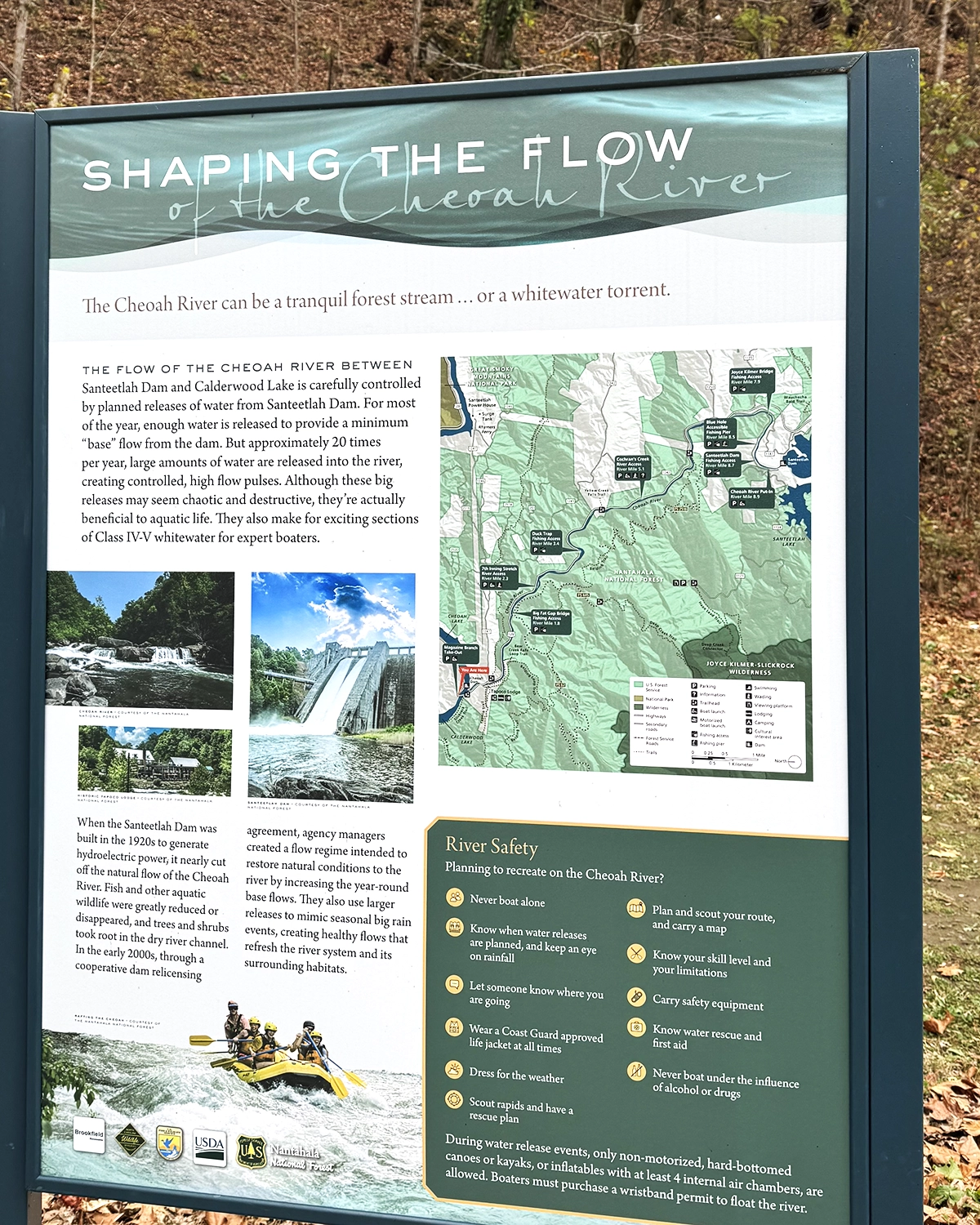
US Forest Service interpretive sign titled “Shaping the Flow of the Cheoah River” .
Featured in Gear Junkie
Gear Junkie has highlighted the Cheoah’s whitewater experience, “With more than 2,000 miles of rivers and the most whitewater rivers in the southeastern U.S., North Carolina is a paddler’s paradise. From mellow riffles and Class I rapids to more challenging runs, North Carolina’s whitewater scene has something for all experience levels. But one river has earned a reputation among experienced paddlers as a bucket list whitewater experience.
Known for its steep and technical rapids, the Cheoah River offers tantalizing Class III to V rapids that give even the most experienced paddlers a thrill.”
Partner Organizations
Cheoah River releases are made possible through a partnership among Brookfield Renewable, which operates Santeetlah Dam; the US Forest Service, which manages river access on the Nantahala National Forest; and American Whitewater. Graham County Travel & Tourism is proud to welcome paddlers and spectators to the Cheoah River.