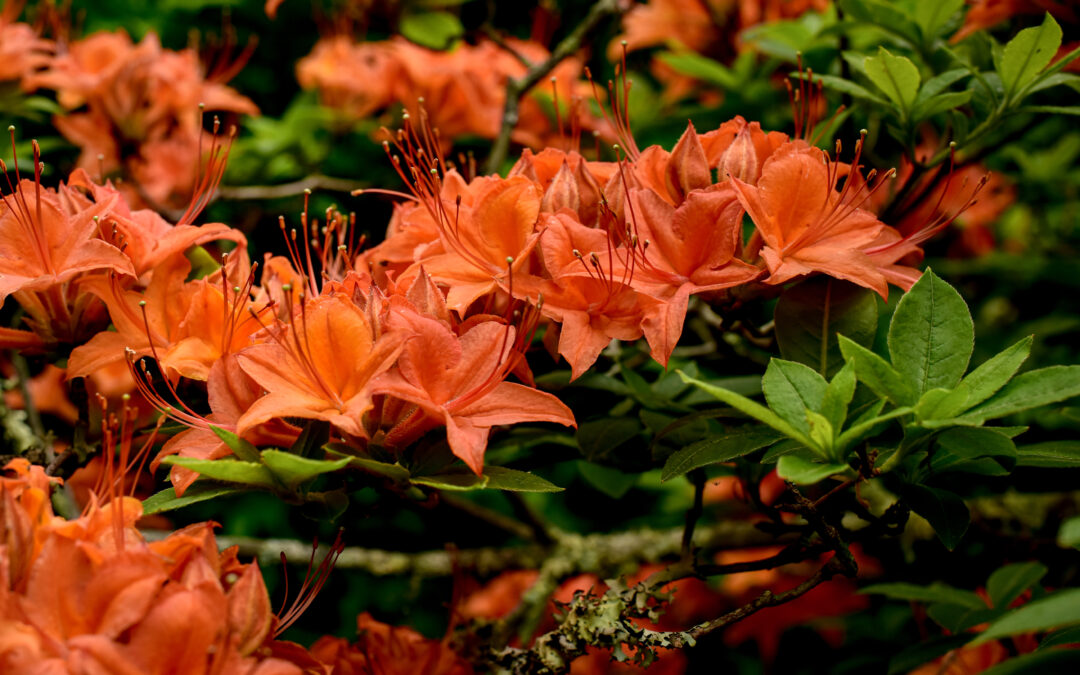
The various members of the Rhododendron family bring the month of June to the forefront of months to visit western North Carolina. The Great Bay Rhododendrons and the Mountain Laurels brighten the darkest woods. The blossoms appear like glowing stars in the midst of the dark green leaves. However, the Flame azaleas steal the show. In the late 1600’s the botanist William Bartram remarked that the first time he saw the flame azaleas blooming on the tops of the mountains he momentarily believed the hilltops to be on fire! Although the flame azaleas begin to bloom in late April at the lowest elevations, it is in the month of June that their blooms crown the mountaintops along the Cherohala Skyway.
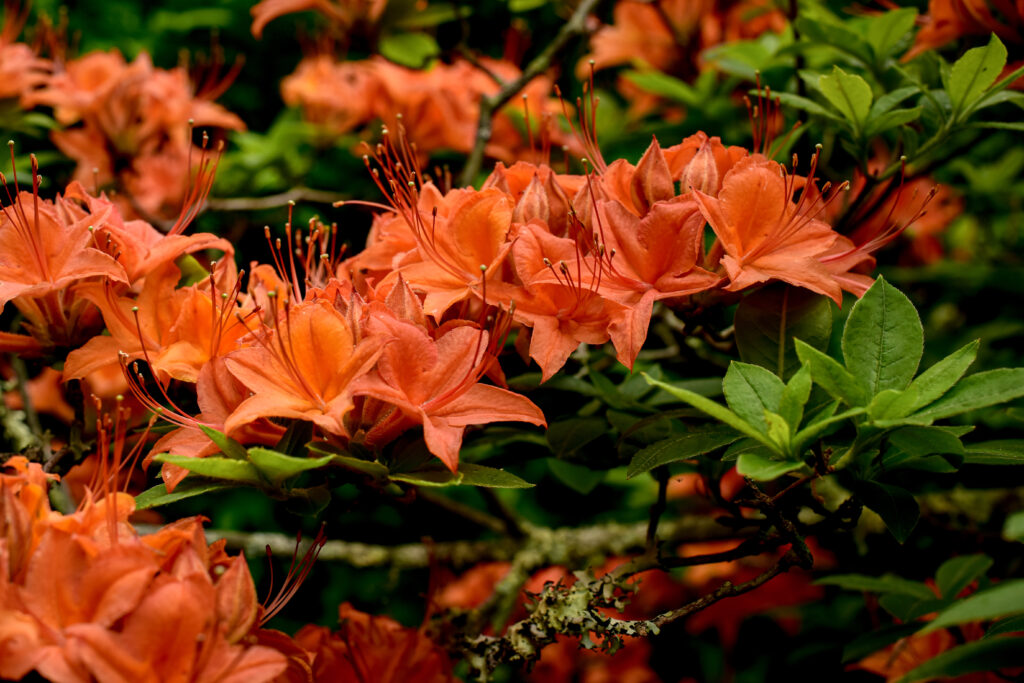
A stop at Hooper Bald in June with a quiet walk along the nature trail there is unforgettable. Added to that thrill are the blue ghost and synchronous fire flies that light up the night for an hour or two after dark. Joyce Kilmer Memorial Forest is one of the locations where you can sit and admire these magical insects. Remember to keep it dark by turning off your car headlights and putting red cellophane across your flashlight so that you don’t disturb the fireflies or the others watching them.
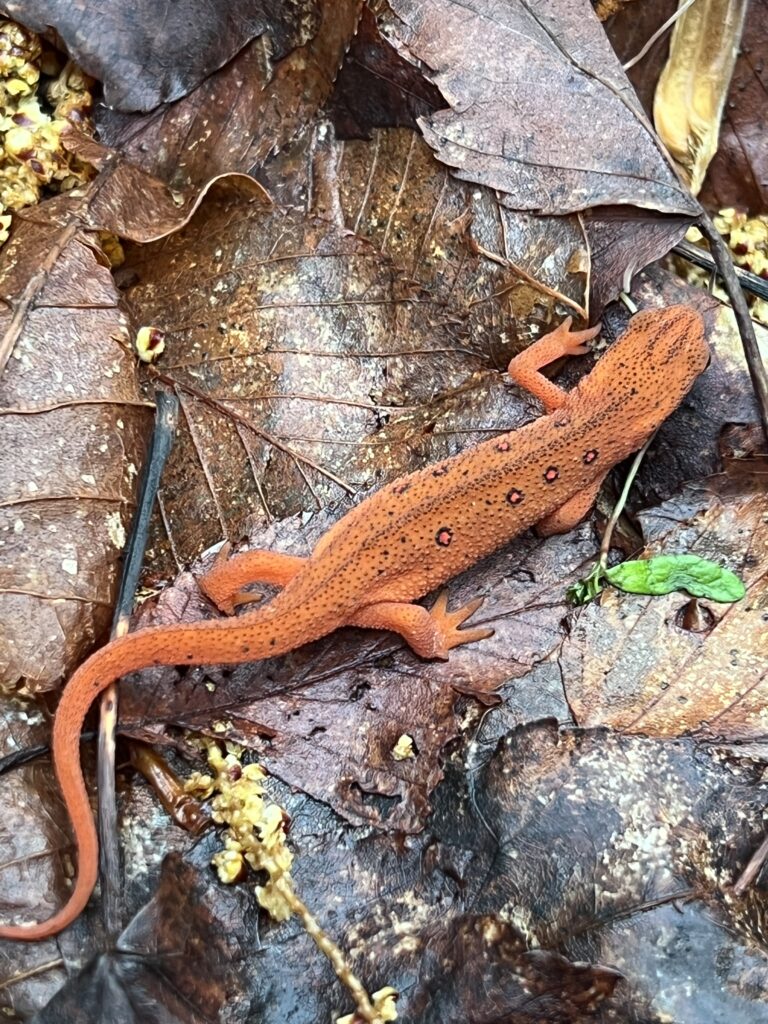
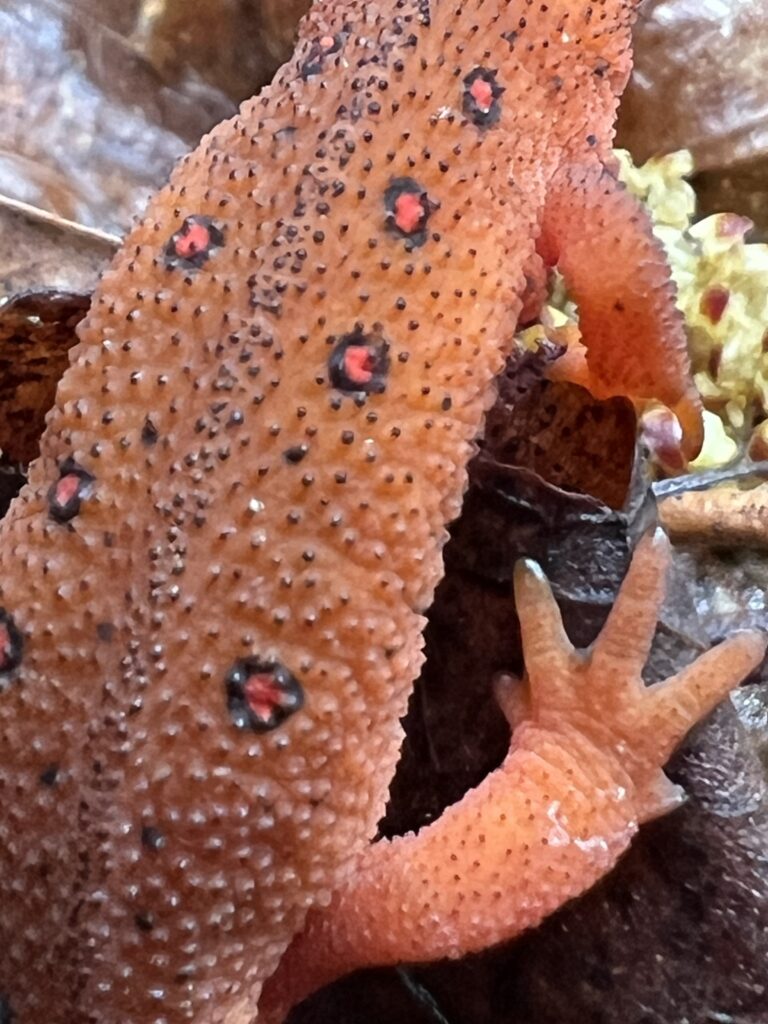
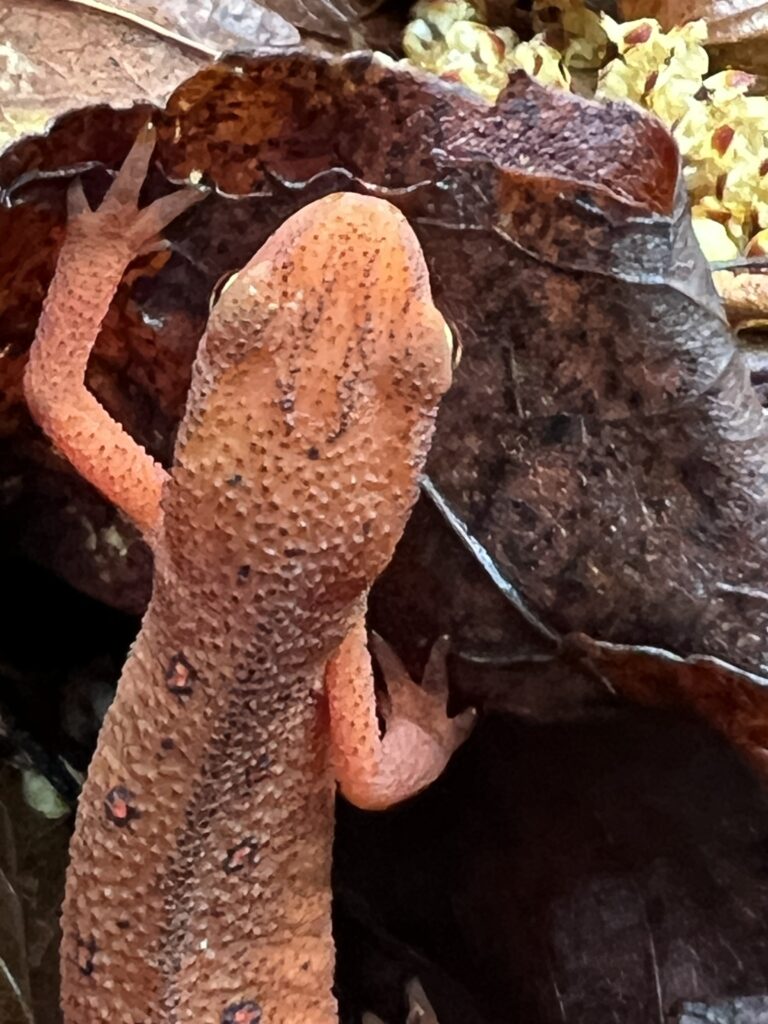
June is the month that the marvelous chanterelles emerge. These mushrooms are a brilliant lemon yellow and are very photogenic, especially if they have a backdrop of moss. The most popular edible wild mushroom in the country, they are anticipated by all mushroom foragers. You may also spot the wandering phase of the Eastern Newt (called an Eft) walking in the cushions of deep moss in the forest (pictured below). Ranging from light orange to a brilliant bright orange these newts live between 12-15 years. Part of their life cycle is aquatic.
Flitting across dirt roads and along streams is the beautiful Northern Cardinal, with a song that resembles the words “See Here! See Here!” Their eggs are hatching and the much more timid and less vividly colored females are busily feeding their voracious youngsters. Cardinals are one of the birds that spend the year round in western North Carolina. In 1943 the North Carolina General Assembly named the cardinal the Official State Bird. Many consider seeing a cardinal a portent of happiness and good luck.
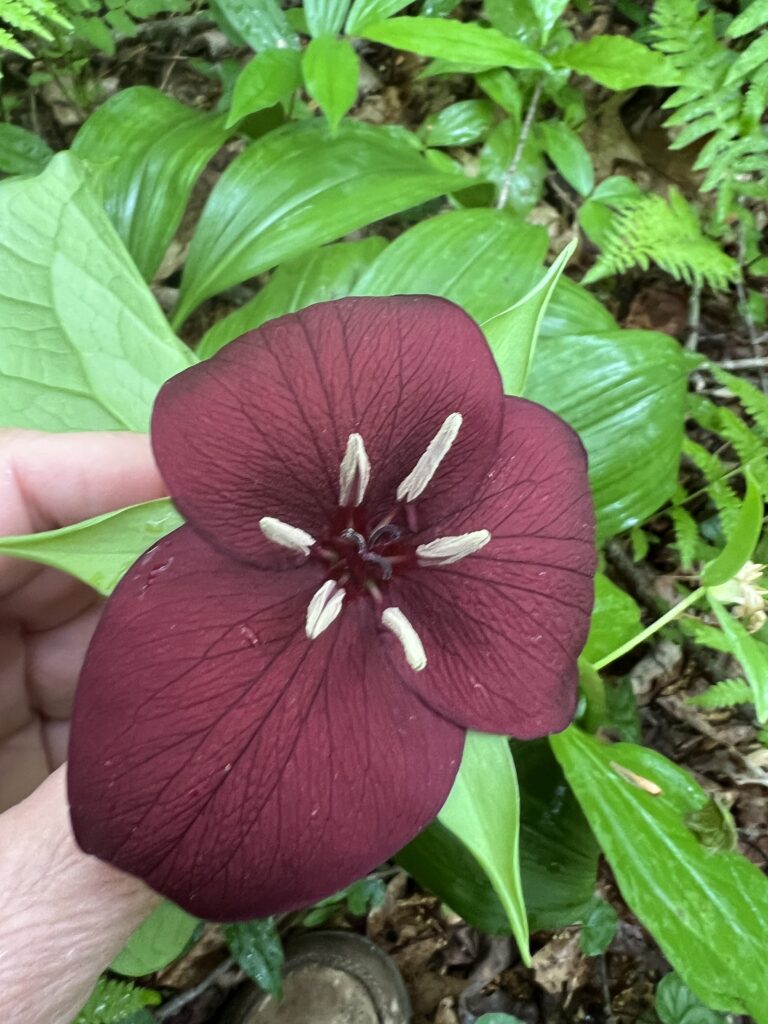
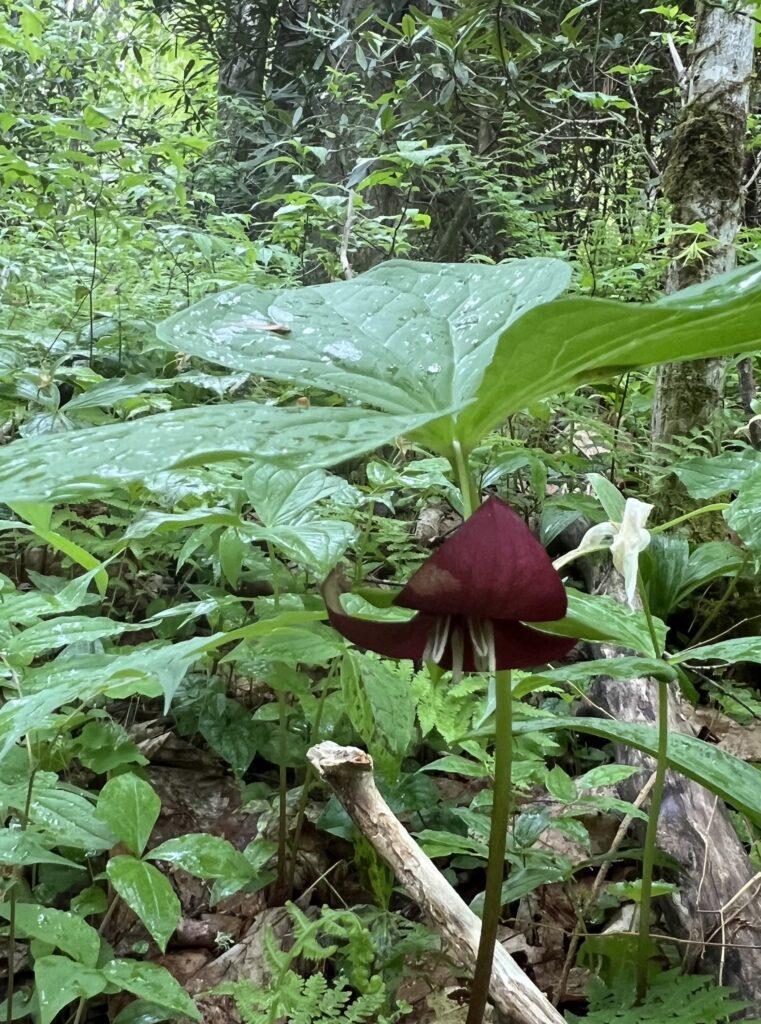
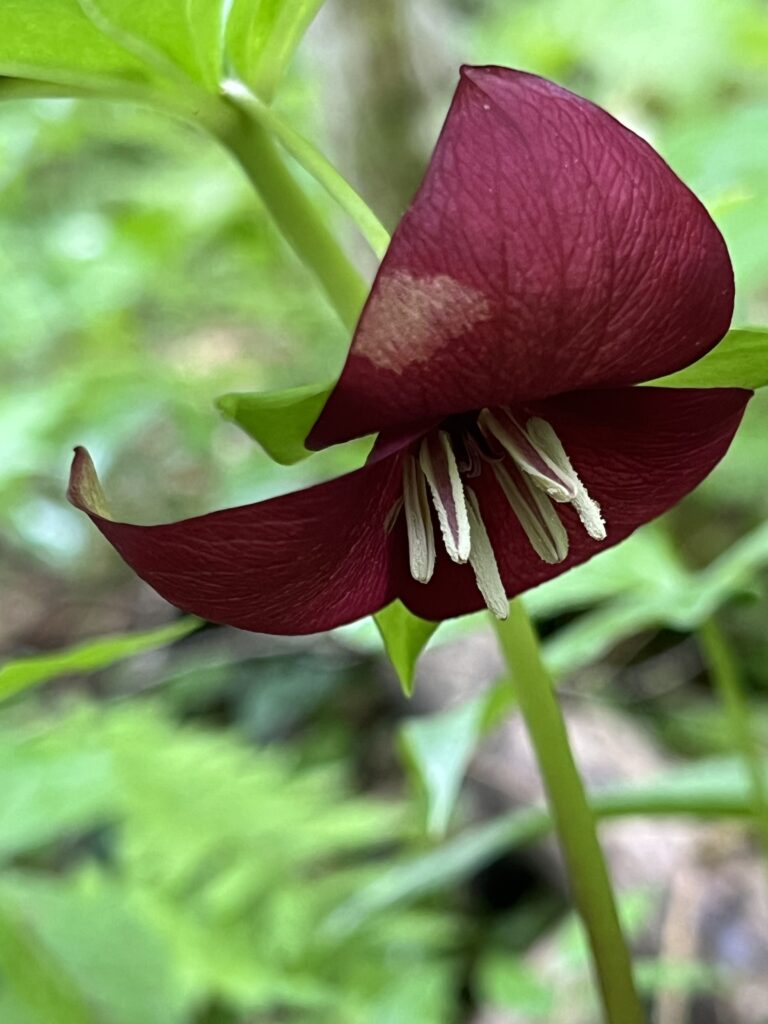
The last of the trilliums, Trillium Vaseyi, will be blooming in early June (pictured below). It is huge! A beautiful dark maroon blossom that hangs below the leaves. The other trilliums are already dying back except for at the highest elevations. Many of our spring ephemerals are here and gone in the blink of an eye, only to be replaced by more beautiful flowers, especially orchids, in July and August.