
The glorious month of May is the time to see Spring in full swing in the mountains of North Carolina. Spring ephemerals take the spotlight. Spring ephemerals are plants that must spring forth from the ground, gather energy and produce a flower before the trees above them grow leaves large enough to block the sun from the forest floor. Nature seems to be in fast forward during May and the same trail changes daily.
May is the month for the great silk moths. Their lifetimes are short. The adult moths do not feed. They emerge from overwintering pupae and lift from their hiding places to seek mates. If successful they quickly deposit their eggs on the appropriate food source and in a week or two, faded and worn, their life ends. Several moths to look for in May are the Luna (Actias luna), the Cecropia (Hyalophora cecropia) and the Polyphemus (Antheraea polyphemus). A fun experiment for children and adults is to stretch a white sheet between some trees and shine a white light, a black light or ideally both onto it for a night. Check the sheet every hour to see the plethora of moth species and other insects that you attract.
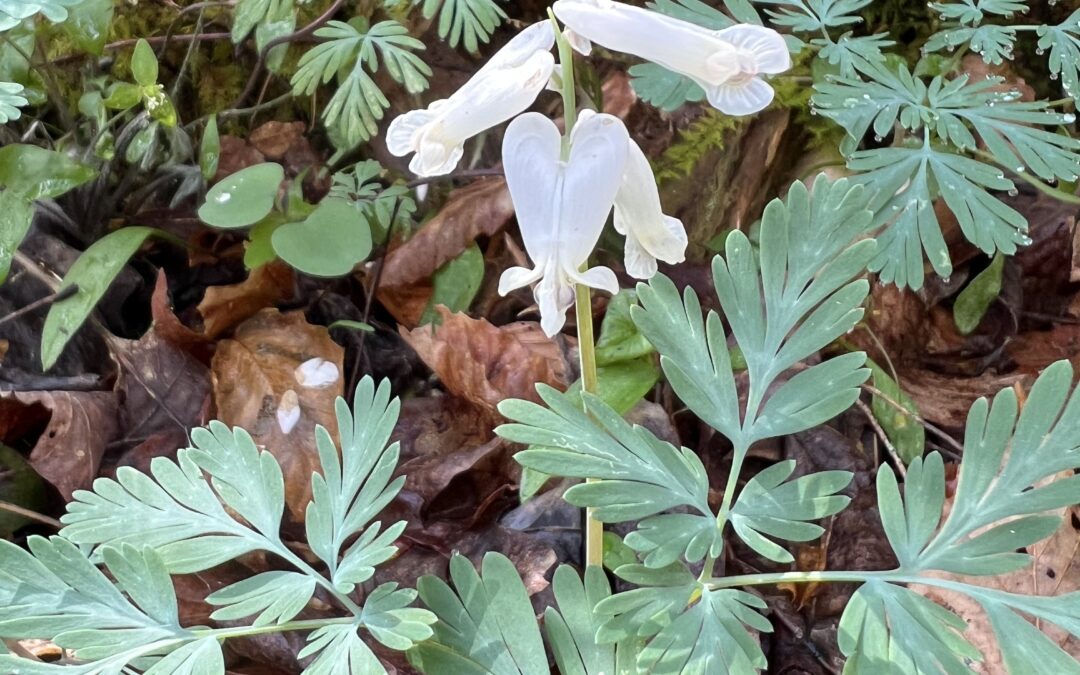
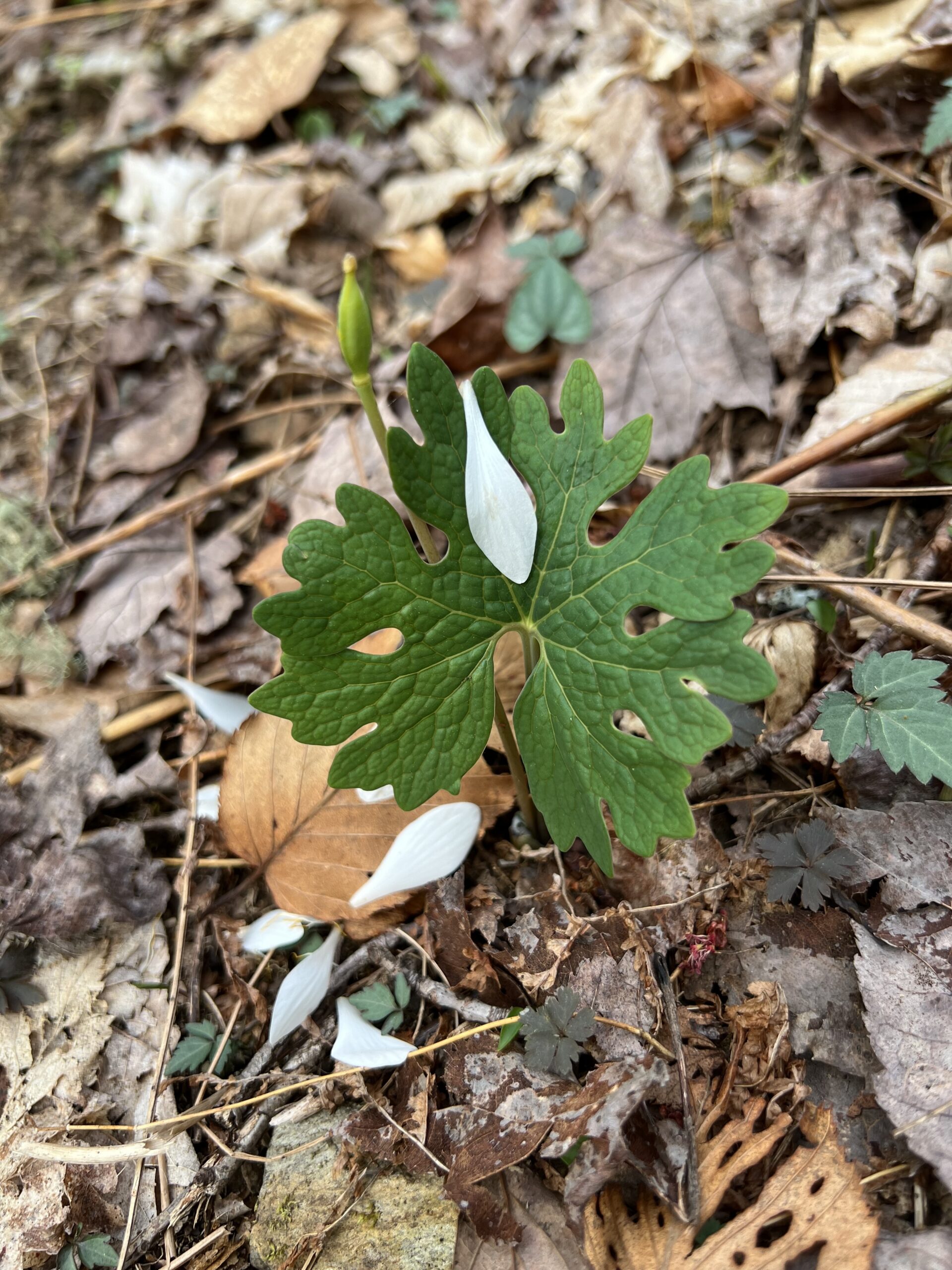
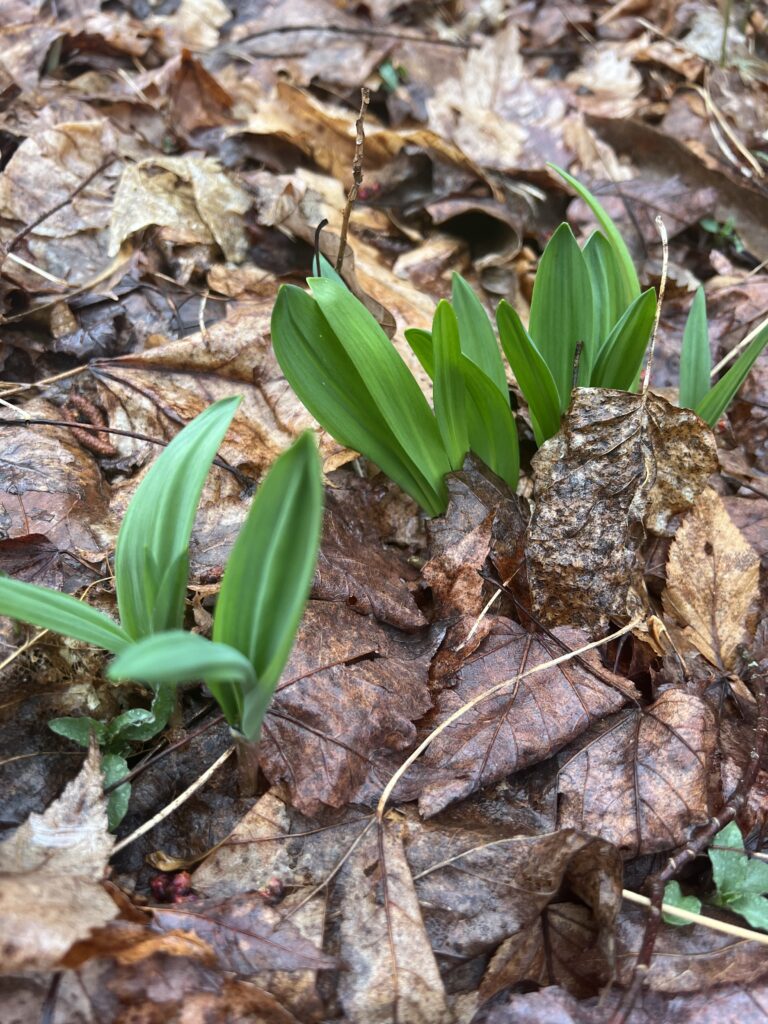
Along the trails in the forest are numerous plants to see. A few favorites are the May Apple (Podophyllum peltatum), Bear Corn (Conopholis americana), Ramps (Allium tricoccum), Blue Cohosh (Caulophyllum thalictroides).
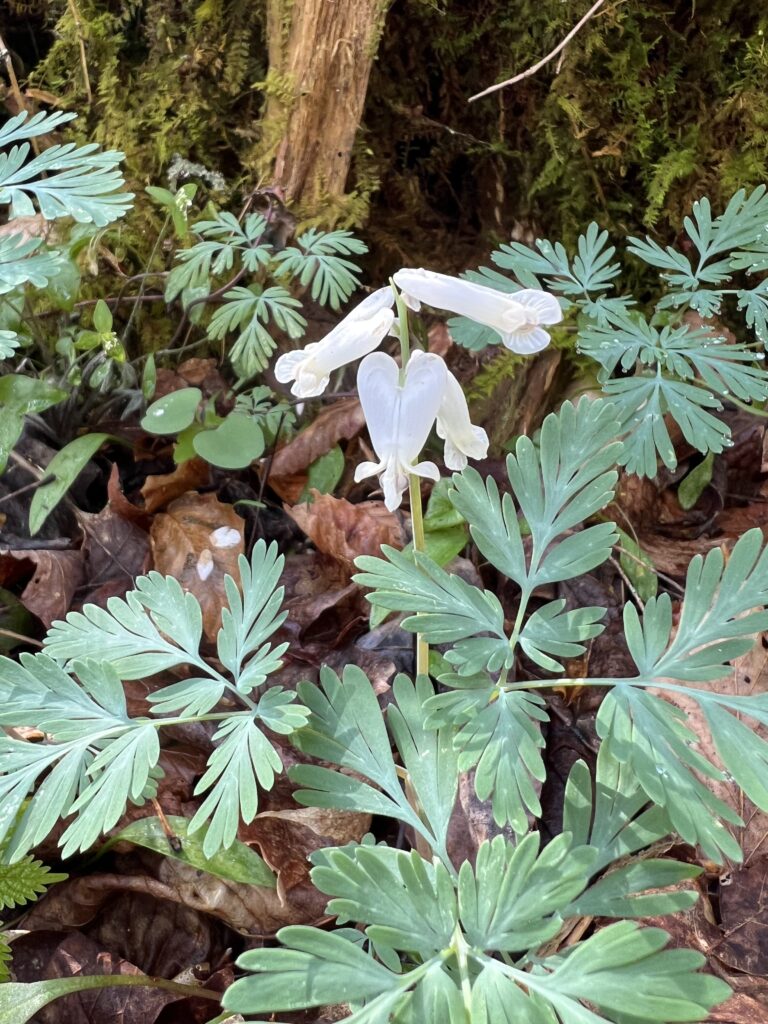
Two plants that are easily confused and equally beautiful are Squirrel Corn (Dicentra canadensis) and Dutchman’s Breeches (Dicentra cucullaria). They are both in the genus Dicentra, which contains eight species of plants with unique, heart-shaped flowers and finely divided foliage. They can both be spotted along the double loop trail of the Joyce Kilmer Memorial Forest in Graham County. The easiest way to tell them apart is that Squirrel corn has flowers with rounded spurs, more heart shaped and they do not have a yellow waistband. Dutchman’s Breeches has flower spurs that are more pointed.
Our mountains can track their roots as a bird haven back to the last ice age. There is a bird “flyway” over the Appalachian mountains that birds have used repeatedly during migration. Millions of birds fly through Western North Carolina in the spring as they head north. You can see them heading south along this same flyway in the autumn. The reason this area is so good for birding is that, after the ice age this area experienced a large amount of new plant growth that the rest of the East coast did not. The plants attracted the many birds to visit and relocate for food and nesting. One favorite is the Wood Thrush (Hylocichla mustelina). It is not easy to spot this beautiful and reclusive song-bird. However, their song is stunning. Because of the bird’s unique voice-box it is able to harmonize with itself and uses its beautiful music to ward off competitors and communicate with other birds. You will find them in forested areas lower to the ground.
May is the month that reveals the diversity of Western North Carolina. Few places have such a vast array of plants, mosses, ferns, birds, trees, fish and insects. It is worthwhile to visit and immerse yourself in the sounds of nature awakening from winter sleep. Waterfalls and streams are running strong and the sound of water adds a backdrop to your forest-bathing adventures.