November wraps up the glory of the mountains in the autumn. I have noticed that the word “glory” almost always comes to mind when you gaze at the mountains and see the glowing yellows, reds, oranges, greens and browns. My favorite colors are blues and lavenders, but I never associate the word “glorious” with them. The mountains in the fall deserve that word. Just the Glory of it all.
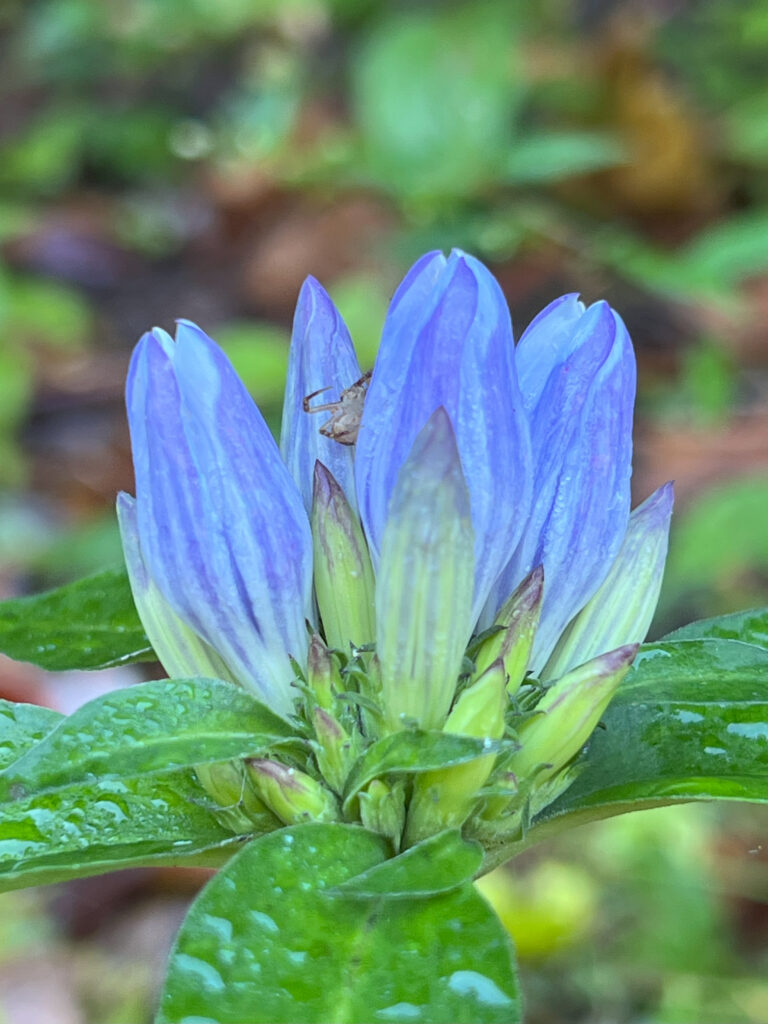
Speaking of blues, November is the month when blue gentians can be seen in the pastures and fields. We have several varieties and they are the last wildflower to bloom in the year. The asters bloom a few weeks earlier, but the gentians can be seen as late as mid November, catching the attention of the lovers of blue.
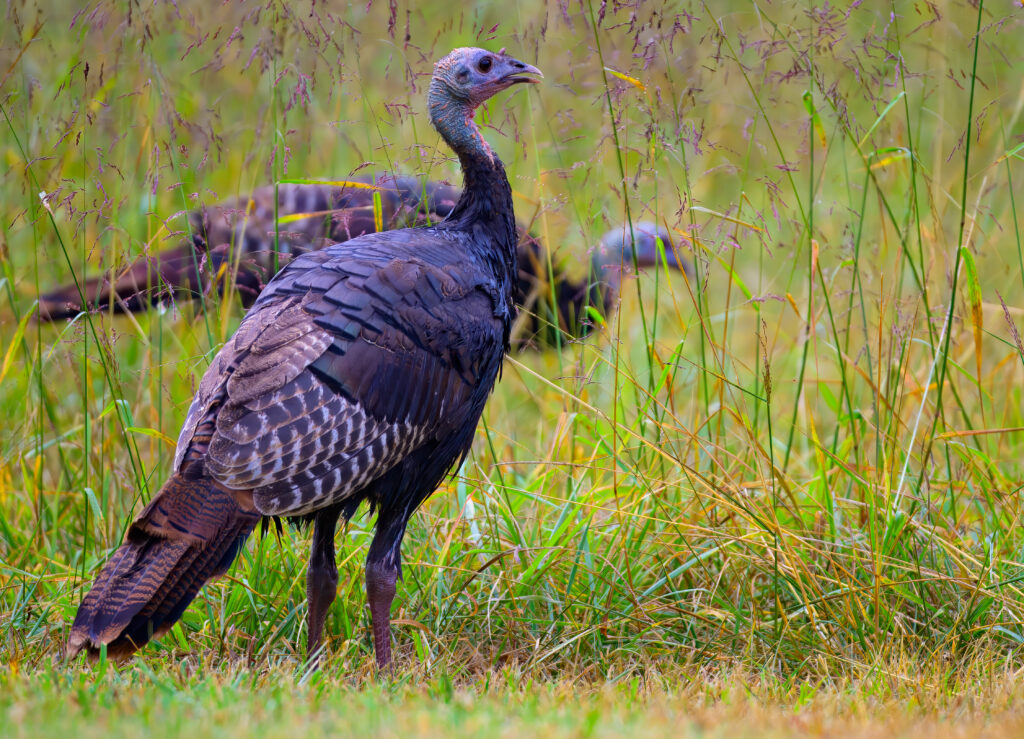
November is the month of plenty in the forest and fields. The last of the apples and pears are ripe. Pumpkins and gourds are everywhere in the fields. The sound of acorns, walnuts, hickory nuts and buckeyes can be heard as they fall to the ground and onto metal roofs of cabins. This is when we see the animals out foraging. The other day my husband announced that my chickens had escaped the coop and were wandering in our orchard. I rushed to the window, only to discover that two huge female turkeys were walking past the coop and cutting through the field. Wild turkeys are on the bird life lists of birdwatchers from around the world. They are the number one bird that birdwatchers want to check off on their lists when they come to the United States. Of course, they remind us of Thanksgiving and the wonderful meals soon to come.
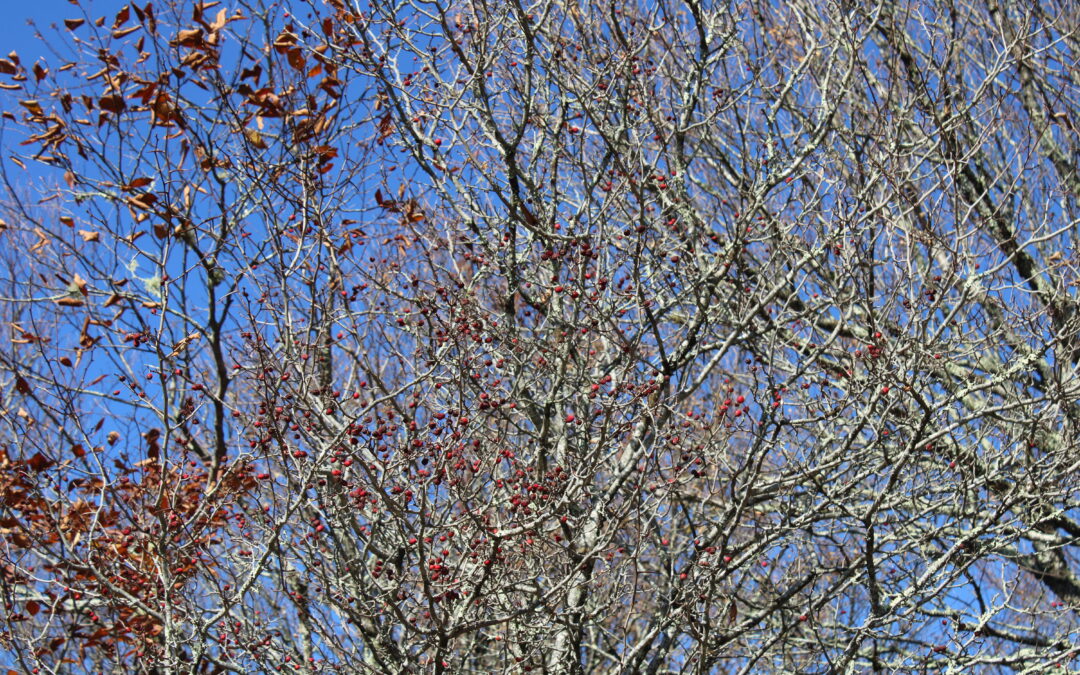
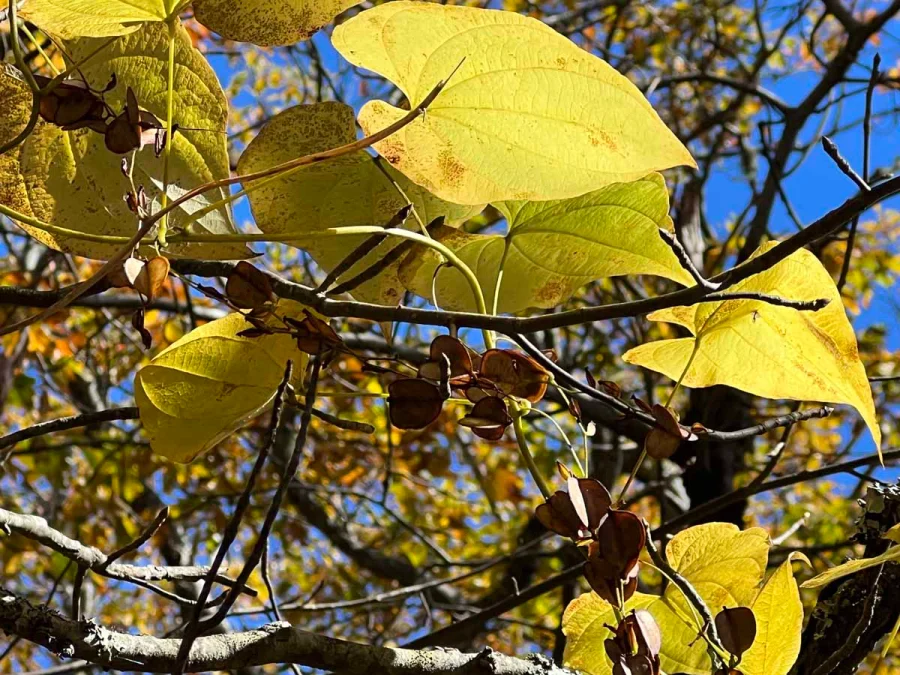
On the Balds, dark red berries cover the wild hawthorne and provide a feast for the bears, wild boar and myriad birds who find them highly desirable. High in vitamin C, hawthorne berries help all the animals and birds survive till the spring brings fresh food. In the fields and forests are seed pods everywhere you look. The beautiful, semi-transparent pods of the wild yam, one of the native medicinal plants found in this area, twine around other, sturdier shrubs and rustle like castanets in the breeze. Wild Yam has heart shaped leaves which turn from green to a bright yellow in the fall. They are a picture to see and you can find them along the hiking trails in rich woods throughout Graham County.
Although usually most of the leaves have fallen to the ground by November, the Red Oak is the last tree to lose its leaves in the fall. The leaves are a lovely dark auburn color and can often be seen with a blanket of snow beneath them. To sit on the porch, wrapped in a cozy sweater or blanket, on a sunny November day, a wood fire in the stove inside, or a fire circle outside and watch the breeze blow the red oak leaves hanging on the branches, is unforgettable. The fragrance of the fall leaves is something that lingers in your mind throughout the year and late October to mid November is the time to experience it.
Once you have spent time in Graham County in November, you’ll return again and again.
Author: Kim Hainge