
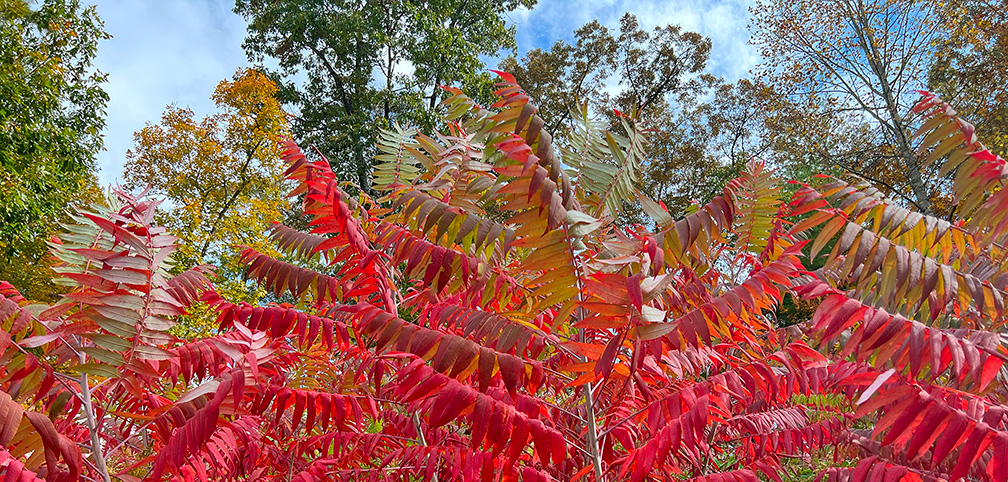
Autumn can be experienced in Western North Carolina from mid-August through November. It begins with the brilliant red and orange foliage of the Sumac and the American Mountain Ash. Sumac can be seen along most roadways, flourishing its scarlet, plume-like fruits which wave in the slightest breeze. Mountain Ash, on the other hand, can rarely be seen below the elevation of 4000 feet and prefers 5000. The best place to see this beautiful tree, with its bright orange clumps of berries, is on Hooper Bald. Bears love the berries too and can often be spotted feeding on them at dawn or dusk. In England the berries are used to make a savory preserve that is served with wild game.
At the beginning of September the gold leaves of the Tulip Poplar, Birch and Buckeye begin to drift to the ground. Fall colors begin at the highest elevations first, as do the low nightly temperatures. Two seasons can be experienced at once depending on what elevation you visit. The numerous pull offs along the sweeping road make the Cherohala Skyway one of the best places to view early fall color changes. The best times are in the early morning and about an hour before sunset when the light from the sun slants perfectly to highlight the leaves.
In late August the very first birds begin their long migration flights to the warmer southern lands. This makes the mountains a wonderful place to bring your binoculars and sit quietly in September. The Rose-Breasted Grosbeak can be easily spotted with its white breast marked with a huge red heart. The Baltimore Oriole and lots of thrushes and warblers choose this month to start heading south. Look towards the top third of the trees and you will see them excitedly flitting from branch to branch.
If you yearn to hold on to the last bits of summer, head to the lowest elevations. The Historic Tapoco Lodge and Fontana Village in Graham County are at about 2000 feet where most leaves will remain green for another month at least.
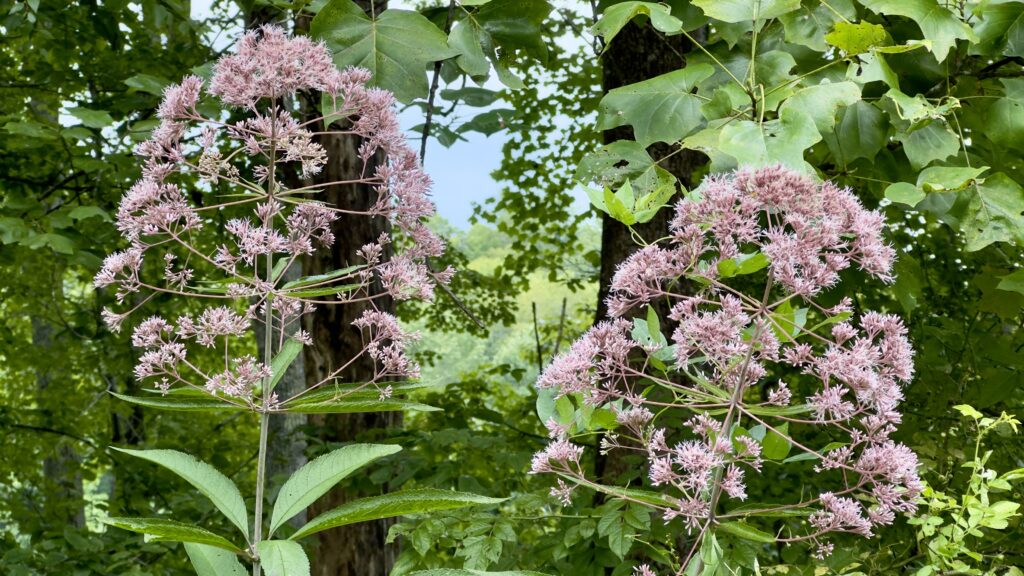
By September the fall wildflowers are peaking. You will see the many different varieties of Goldenrods, seed heads of thistles, and Joe Pye weed (Queen of the Meadow) along the roadways. Iron Weed is blooming in the fields attracting the Goldfinches that feed on their seeds. Don’t forget to watch for the migrating monarch butterflies that soar overhead in clouds and periodically swoop down to fill up on nectar that fuels their southern journey.
Consider bringing your kayak or renting one –viewing the fall foliage while you kayak in Lake Santeetlah, Cheoah Lake or Fontana Lake is delightful.