The Grand Old Stage
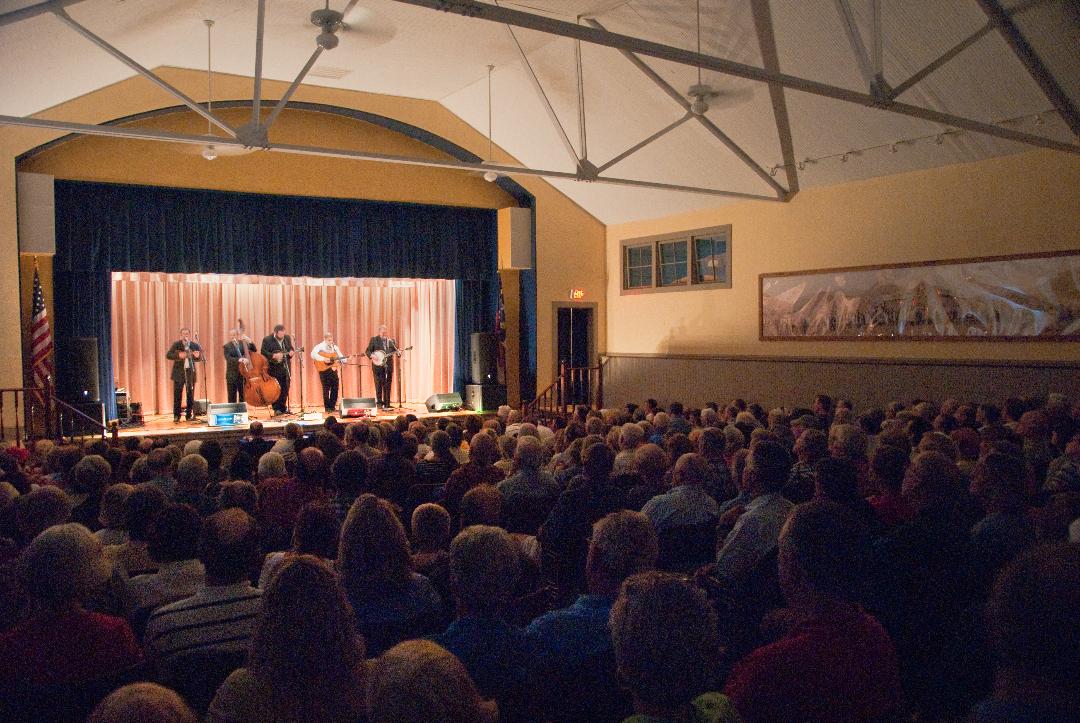
Balsam Range on the Grand Old Stage
Photographers Credit: Charles Snodgrass
If you’ve ever had a tour of the Stecoah Valley Center you know that the first stop after leaving the gallery and walking by the old piano is center stage. Visitors stop and look out into the beautiful auditorium in awe – it’s often such a surprise when they realize where they are standing. The beautiful ceiling soars overhead, the wooden auditorium seats gleam in the sun, and everything is nicely framed by rich velvet blue curtains. After you’ve caught your breath, your guide will likely tell you that you are standing in the very spot that the early legends of bluegrass stood playing to a crowded auditorium. Details of this story can be found on the Stecoah Valley Center website.
“Historically, the Stecoah school was a popular venue-stop for musicians on tour from Nashville. In the early 40s and 50s our Grand Old Stage has been graced with the top bluegrass performers of that time –
Lester Flatt and Earl Scruggs, Bill Monroe, The Carter Family, Chet Atkins, Bonnie Lou and Buster, Archie Campbell, Carl Story, Elmer Jethro, Martha Carson and the Brewster Brothers to name just a few.
Many of these musicians were featured on Mid-Day Merry Go Round, a popular WNOX-Knoxville radio program. It seems these musicians charged little or nothing for admission and put on a great show to a full house! Stecoah’s performers today follow in the footsteps of these great musicians as well as the smaller footprints of the many school children that have performed on this stage.”
In The Days of Radio
This statement was likely written in the early years of the auditorium restoration and came from the recollection of community members who are no longer with us. There is an interest in documenting that history and there are likely still people in the community who remember. Collecting those stories along with any supportive documentation such as newspaper clippings or advertisements adds value to the collective Stecoah history both for the community and for the thousands of people who visit each year.
Willa Jean Cody grew up in a somewhat forgotten part of Graham County – the little community of Poison Cove. Her earliest musical memories are of local families entertaining themselves and of her mother singing in church. Her family moved to the Stecoah Valley in 1946 a year after generators began to produce the power that fed aluminum production for the end of the war. She still lives there today.
Willa Jean fondly remembered those days, “Now, when we lived in Poison Cove we had a radio. A lot of people didn’t have them – on Saturday night we had the living room full of people come to listen to the radio. I listened to the Grand Ole Opry and stuff like that.”
‘Stuff like that’ included radio station WNOX, “The Mid-Day Merry Go Round was on Knoxville on the radio. Cass Walker – he owned the grocery store down there and provided the funds, you know, to keep it a going,” Her conversation is paced in that old way of talking, “Carl Story, Bonnie Lou and Buster, and people like ‘at, you know, is the ones that you remember being on the Mid-Day Merry Go Round. Dolly Parton – that’s where she started when she was 10 years old. We had got a television by then – I remember the first time we seen her. We lived in a little house up the road up yonder. And we’d watch the others, you know, after we got the TV.”
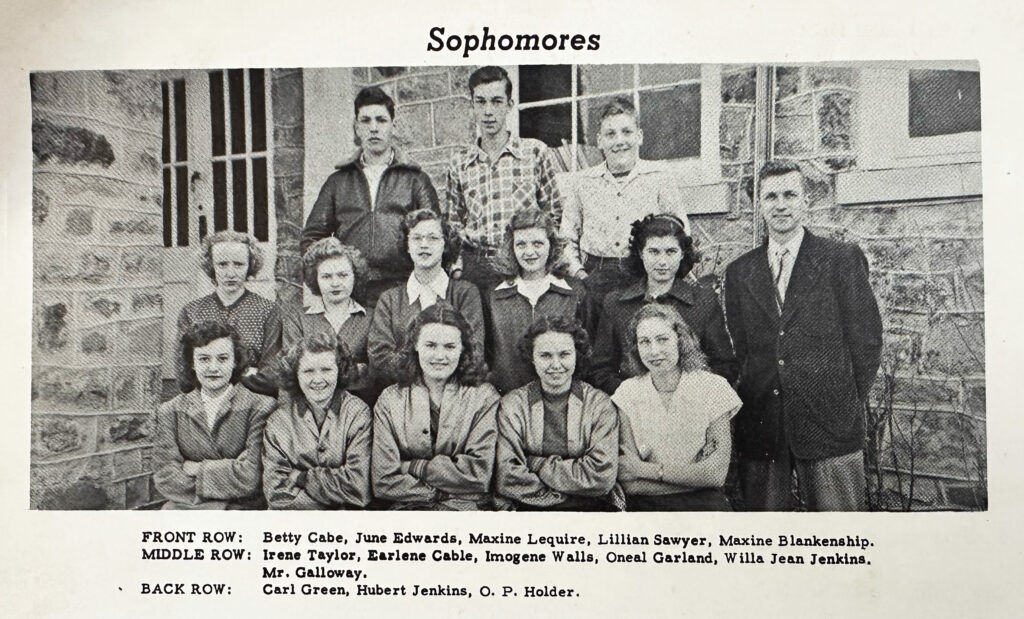
1951 Stecoah Annual; Willa Jean Cody (middle right)
Willa Jean was a student at the Stecoah school during those early years after the lake was flooded. The two wings that house the Artisan Gallery and Textile Studio were built during that period to accommodate extra students. She attended high school in the early 50’s when WNOX celebrities began making a circuit that included Stecoah, playing in the same auditorium used today. Concerts were scheduled in the evenings and were only advertised by word of mouth. They pulled in a very local audience of all ages with people coming from Bryson City at the farthest. The room was full, the footlights were used, and sometimes the piano – it was pretty simple.
“They just was good singers. They talked a little and put on a good show. They didn’t elaborate on a lot of stuff or show their self. They just entertained the people, you know – just simple.” Willa Jean emphasized how special it was for the community to see the performers they had heard on the radio, “That was the main thing, you know, to get to see what they’ve been hearing on the radio all that time. I remember the Carter Family,” she tells about Mother Maybelle and the four girls, “They came [to Stecoah] several times. Bonnie Lou and Buster did too. Now, June Carter’s one of The Carter Family, you know, June Carter Cash – and we all liked her. She was – she was a sweetheart. That was in between ‘51 and ‘53, I’d say – somewheres along there.” Archie Campbell who drove the bus and accompanied the Carters on stage was a fond attraction to students – they played ball with him before the shows.
A decade later when she was working at Fontana, Bonnie Lou and Buster made another pass through Graham County, “Now this was a few years after I got out of school because it would have been in ‘62 that they came through the [cafeteria] line in Fontana Village and I checked them through on the cash register. I remember exactly that because I worked down there in ‘62.” A decade and adulthood didn’t lessen the admiration, “I thought that was a little bit exciting, you know, checking them through.”
During those years, time and technology in Stecoah might have changed, but community didn’t. “And then when we got the TV’s over here [in Stecoah], it was the same way at our house, then. So, it’s just something that’s went on all these years and you never thought nothing about it.”
Talking with Willa Jean leaves one wondering how many other stories are out there waiting to be found.
I Don’t Know When
In the days of radio people posted their status updates in the newspaper instead of Facebook. Buried deep in the pixels of digital archives, another story was uncovered, “A large crowd from Judson enjoyed seeing Charlie Monroe and his Kentucky Partners at Stecoah Saturday night.” Judson is that often unknown and forgotten town that now lies beneath Fontana Lake.
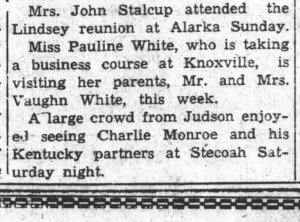
News From Judson – Smoky Mountain Times – July 18, 1940
Charlie Monroe was the elder brother of Bill Monroe and of course he and Bill played together in those early years as The Monroe Brothers – they had their first radio show in 1927 just one year after the Stecoah school was built. The brothers had a difficult time getting along and eventually went their separate ways. Bill, who formed what was later known as the Blue Grass Boys, became the more well known of the two, even though it was Charlie who was the original lead singer.
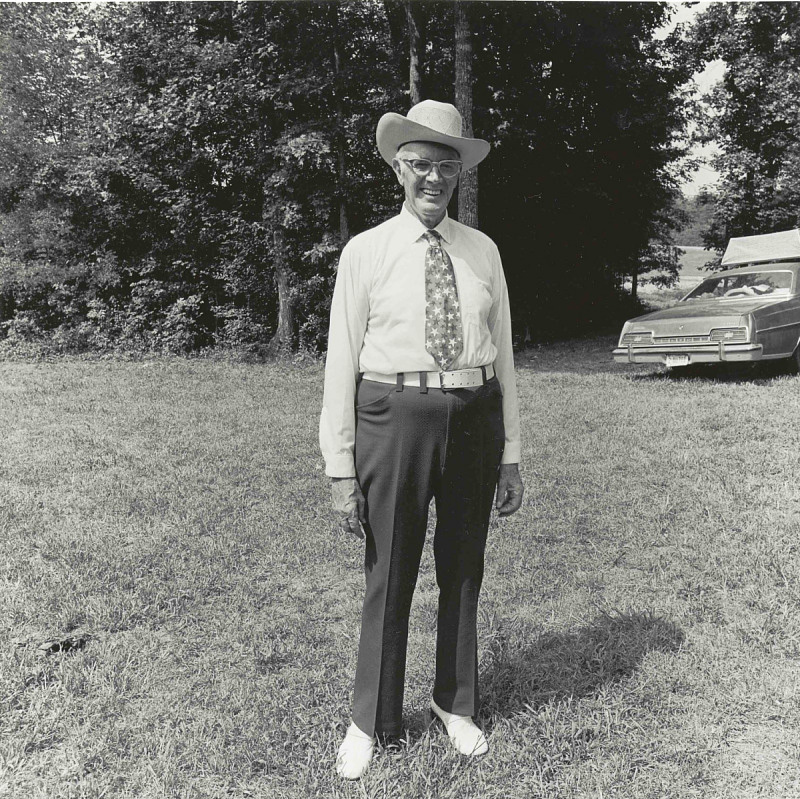
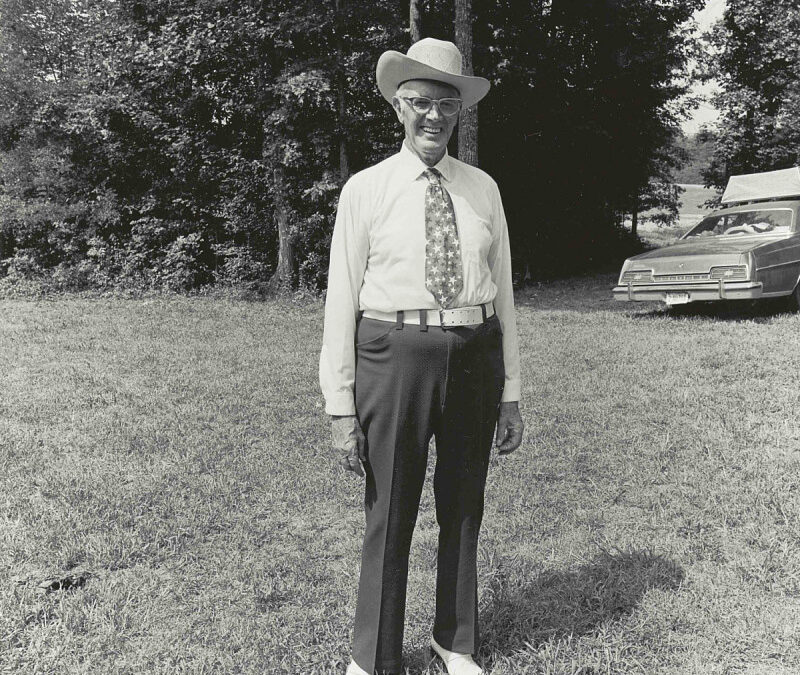
Charlie Monroe, 1973; Photo Credit: Henry Horenstein
A 1938 advertisement from the Knoxville News Sentinel for the Mid-Day Merry Go Round provides a clue as to how Charlie might have made his way to the Stecoah stage. Local WNOX listeners would have recognized Charlie’s name and gathered together in the school auditorium to see the man behind the voice. We know Lester Flatt joined the Kentucky Partners playing mandolin for Charlie in 1943 – only three years after this newspaper clipping. Did Charlie and Bill play Stecoah in the late thirties and Charlie circled back around on his own? Did Charlie later circle back around with Lester? We may never know but Charlie is the first documented link in the chain.
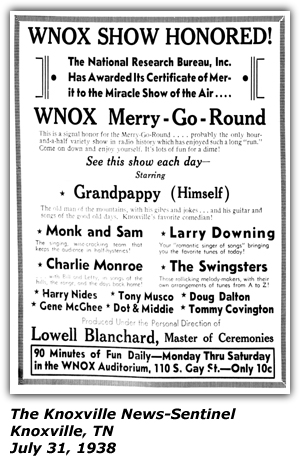
Interviewing just one member of Stecoah led to the verification of three large acts. Deep dives into newspaper archives revealed another as well as a bonus advertisement linking that performer specifically to the Mid-Day Merry Go Round. The authentication of the history of Stecoah’s Grand Old Stage and the Lynn L. Shield Auditorium rests with volunteers and interested community members. Many small town local newspaper archives are still stored in microfiche format waiting to be discovered.
If you discover a clipping or have a story you would like to document please contact info@stecoahvalleycenter.com or call 828-479-3364.